Collateral body
Knights Templar
The Masonic order of the Knights Templar is a chivalric body of Christian character.
- Reserved for Master Masons
- Independent of the Grand Lodge
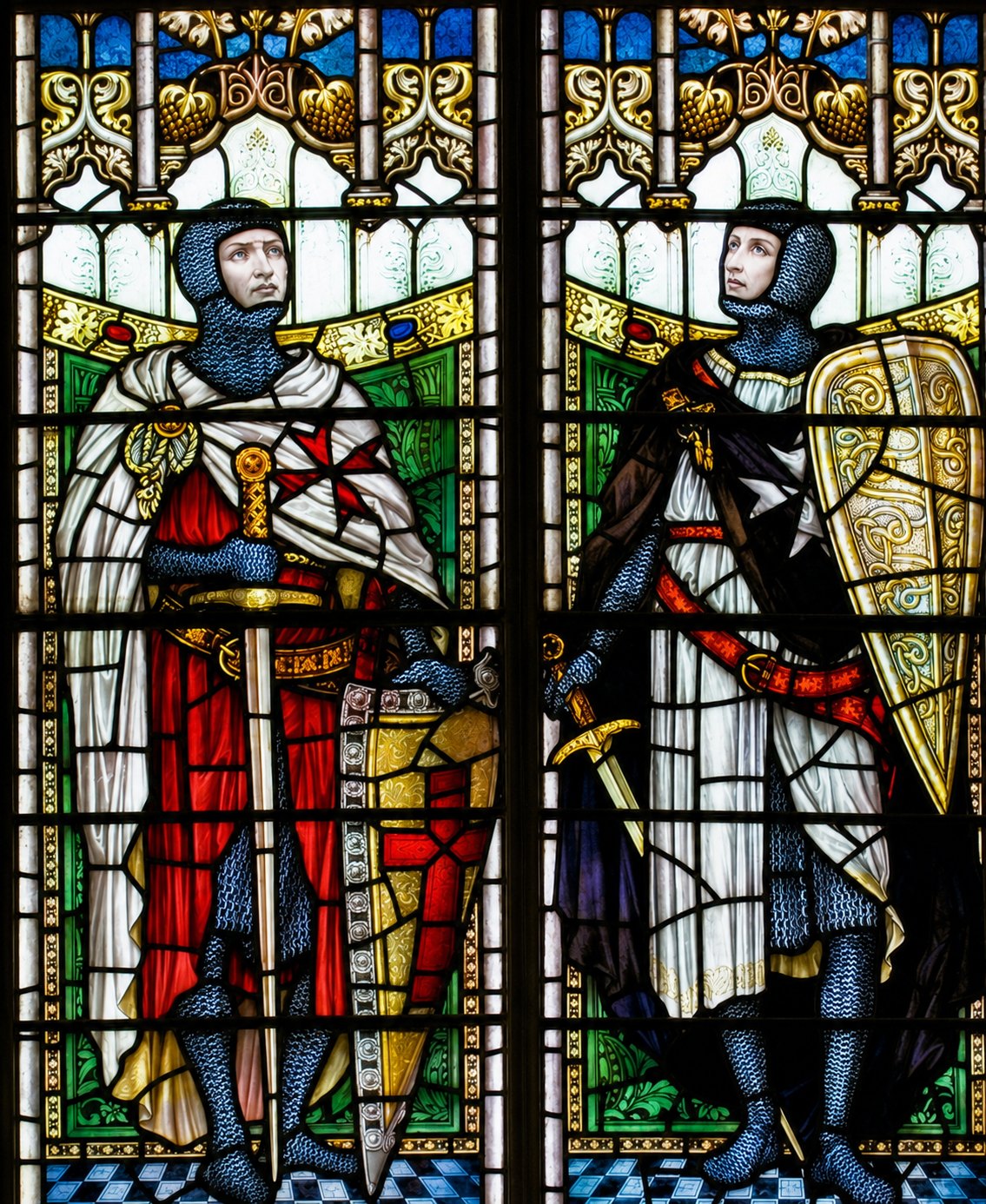

In the English tradition it is part of the so-called United Religious, Military and Masonic Orders of the Temple, and takes its inspiration, symbolic and not historical, from the ancient medieval Order of the Temple. It must be stressed that there is no historical continuity with the medieval Templars: the relationship is purely allegorical.
Unlike symbolic Masonry, which welcomes men of every belief, this order is explicitly Christian: to join it one is usually required to profess the Christian faith. Its ritual works the values of chivalry —service, defence of the weak, fidelity and constancy— in a spiritual key.
In the English tradition, access to the Knights Templar requires prior membership of the Royal Arch, so that it stands at an advanced stage of the Masonic journey. The basic unit is usually called the Preceptory (or Commandery, depending on the tradition), with its own governance.
To join the order of the Knights Templar one must be a Master Mason and a Royal Arch of Jerusalem Mason. It is an order of Christian tradition.

An ancient enigma
SATOR AREPO TENET OPERA ROTAS
The SATOR square, a Latin palindrome (SATOR AREPO TENET OPERA ROTAS) readable in all four directions, is an ancient riddle of early Christian tradition once used as a protective amulet. Legend often links it to the Templars and to esotericism, though the connection is symbolic rather than historical.
Iconography
The emblems and their meaning
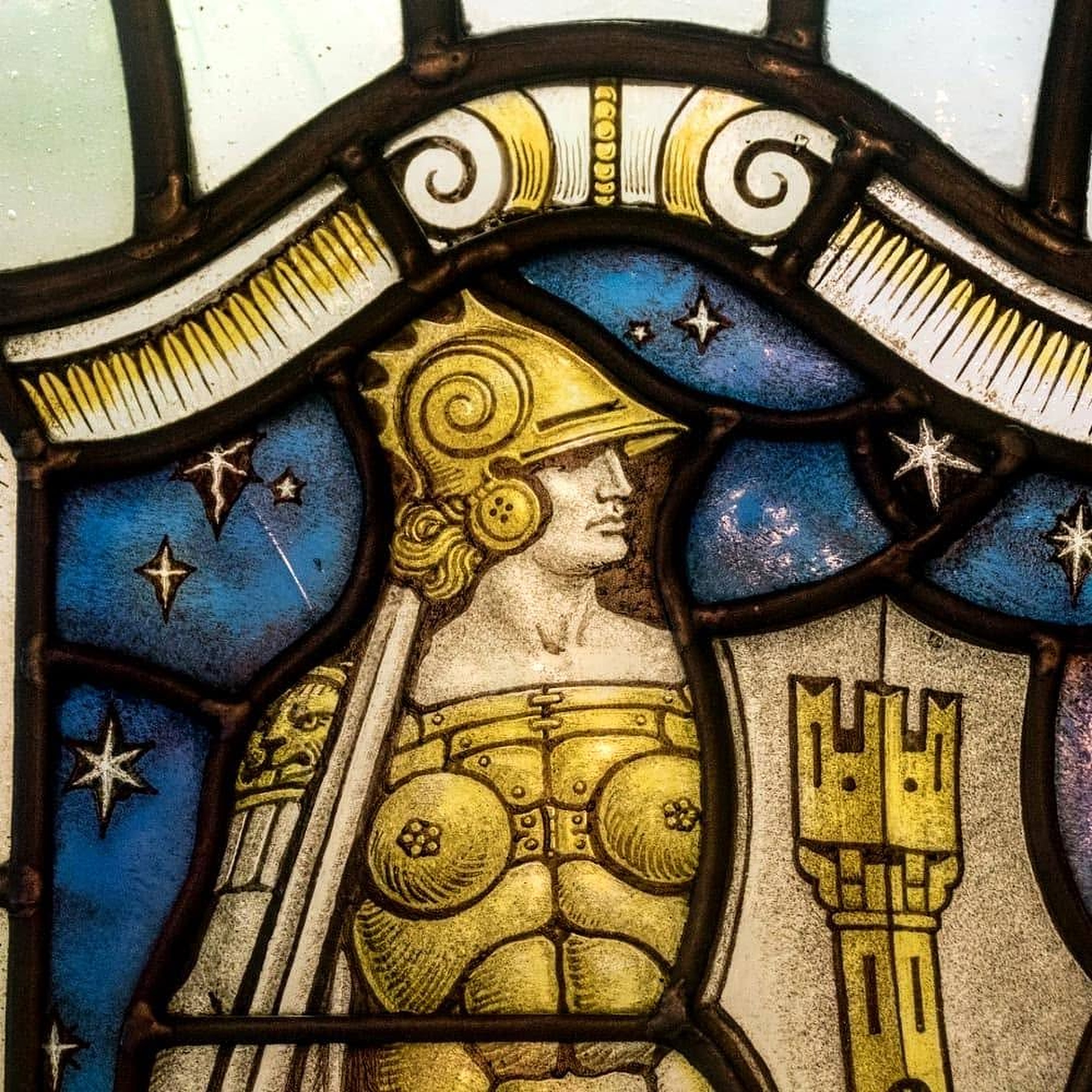
The sword and the cross, the order's emblems, evoke no conquest: the sword stands for the inner struggle against one's own faults, and the cross for the faith that sustains it. The knight's pilgrimage, a recurring motif in its imagery, is a figure of the mason's moral path, advancing by stages toward a goal that refines him. Thus what in legend was a feat of arms is read, in public terms, as a discipline of the soul.
Origins and record
Notable figures
Templar Masonry is documented in England from the last third of the 18th century, with two milestones that fix its present form.
In 1791 a Grand Conclave was formed there with Thomas Dunckerley, one of the great organisers of English masonry of the age, as its first Grand Master.
By about 1873 the body had taken its present name of Great Priory and its units had become Preceptories; this is the form in which it is still governed today from Mark Masons' Hall, London.
1791Grand Conclave, led by Thomas Dunckerley
1873Present name: Great Priory and Preceptories

Detail of «Chapter of the Order of the Temple in Paris, 1147», by François-Marius Granet (Versailles).
How it is organised
Governance and structure
In the English tradition the order is governed by the Great Priory of the United Religious, Military and Masonic Orders of the Temple and of St John of Jerusalem, Palestine, Rhodes and Malta of England and Wales, administered from Mark Masons' Hall in London.
The basic unit is called a Preceptory. Above it are the Provincial Priories and, at the top, the Great Priory. The same system also confers the allied Order of Knights of Malta.
Around the Lodge
Independent, but with a common prior condition
They are, then, paths of deepening that continue the work of the lodge—each order adding its own ritual and history upon the common foundation of the three degrees. Described here are the regular Masonic bodies that exist in Andorra; some brethren also take part in other Masonic bodies in other countries.
All collateral bodies
The path
It all begins in a lodge
These orders receive Master Masons. The path begins in a lodge of the Gran Lògia d'Andorra.
Become a Freemason All collateral bodies