The timeline
Six centuries
in brief
The Regius Poem, around 1390, is the oldest masonic text in English. It is not yet speculative Freemasonry, but in it the stone already begins to look towards thought.
- The journey
- Starts1390 · Regius Poem
- Spans12 milestones over 636 years
- Ends at2026 · The age of AI
Freemasonry was not invented in a day. It was written, folio by folio, into the old charges of the craft that stonemasons handed down from one generation to the next. This timeline gathers the founding documents and the moments that led from that operative tradition to speculative Freemasonry and, at last, to the Grand Lodge of Andorra.
Each milestone carries the year writ large, the image of the manuscript or place, and a short note on why it matters. Scroll down at your ease: the line draws itself as you go.

1390
Regius Poem
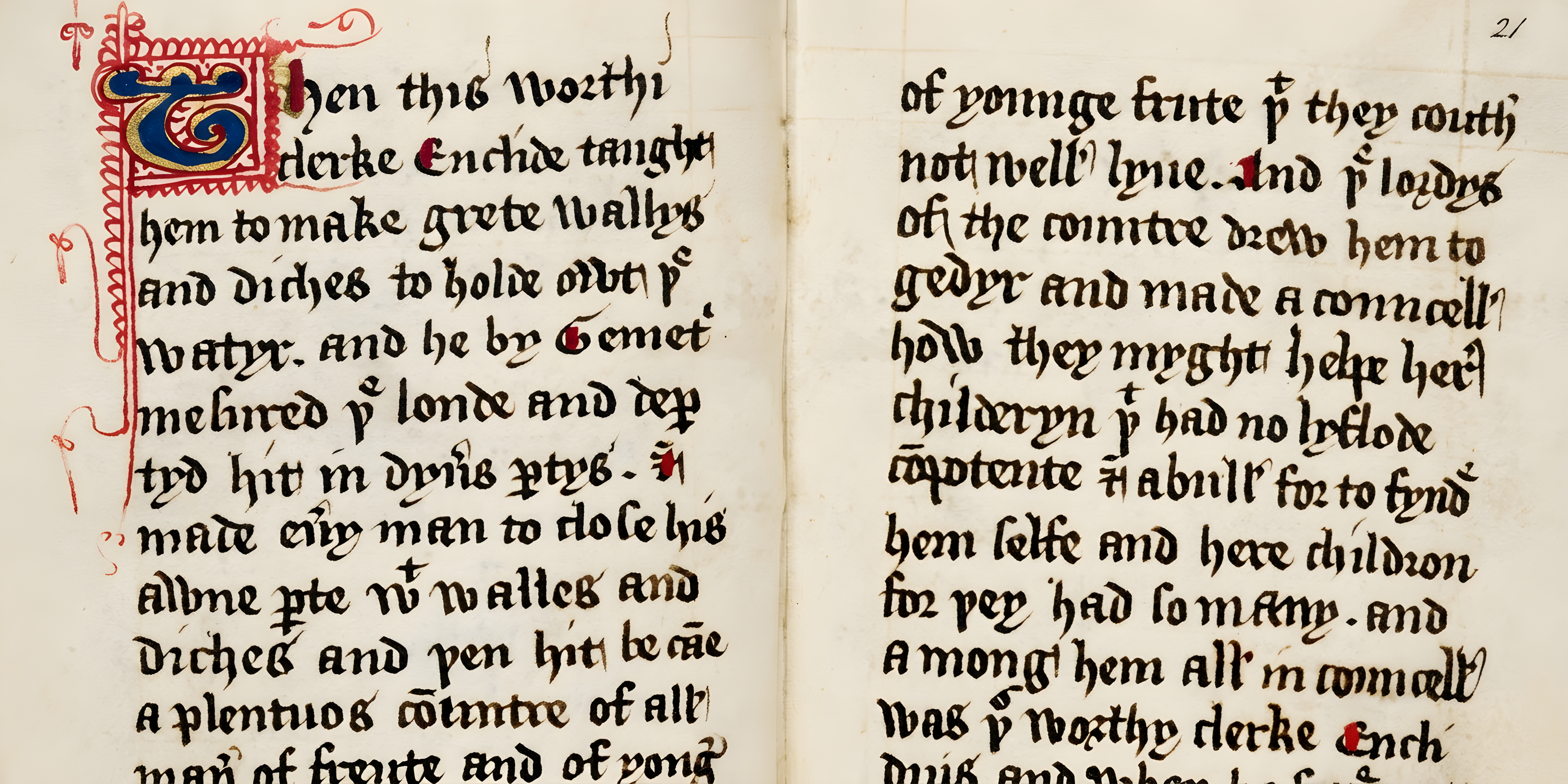
The oldest known masonic text in English verse, around 1390. Alongside the duties of the craft, it frames stonecutting within the seven liberal arts and gives geometry the rank of knowledge: it is the one that 'separates truth from falsehood'. It makes the craft descend from Euclid and from the good king Athelstan. It is not original philosophy, but inherited knowledge; yet it shows that the craft already thought of itself as something more than cutting stone.
Source:
Regius Poem (around 1390), British Library, Royal MS 17 A I.
c.1450
The Old Charges
After the Regius, the craft goes on copying its charges in prose. The Cooke Manuscript, around 1450, traces the genealogy of the craft back to Pythagoras and to Hermes 'the philosopher', keepers of ancient knowledge. A century later, the Dowland (around 1550) and the Grand Lodge MS No. 1, one of the few bearing an exact year (1583), repeat almost the same text and raise Hermes to 'father of wise men'. It is not yet speculative Freemasonry (there are as yet no non-stonemasons nor any symbolic reading of the tools), but the craft claims to be heir to a lineage of the learned: the stone begins to turn its gaze inward. Anderson would consult these manuscripts for the Constitutions of 1723.
After the Regius, the craft copies its charges in prose. The Cooke Manuscript (around 1450) traces its lineage to Pythagoras and to Hermes 'the philosopher', keepers of ancient knowledge. The Dowland (around 1550) and the Grand Lodge MS No. 1 (1583, an exact year) repeat it and make Hermes the 'father of wise men'. Not yet speculative Freemasonry, but the stone begins to turn its gaze inward. Anderson would consult them for the Constitutions of 1723.
Matthew Cooke Manuscript (Additional M.S. 23,198), around 1450.

1598
Schaw Statutes
William Schaw, master of works to the king of Scotland, sets down in writing how lodges are to run, in two sets of statutes (1598 and 1599). They require records to be kept, impose duties on officers and regulate admission: the move from an informal craft to a modern organisation. The Lodge of Mary's Chapel in Edinburgh preserves the oldest continuous minutes in the world.
Schaw Statutes (1598-1599), National Records of Scotland.

1696
Register House Manuscript
The oldest known masonic ritual. Written in Edinburgh around 1696, it gathers on eight folios the questions and answers of instruction for recognising who holds the 'mason word' and describes the ceremonies of apprentice and fellow craft. It is the link that ties the old written duties to the ceremonial practice of the lodge: the passage from operative to speculative Freemasonry seen from inside the room.
Register House MS (1696), National Records of Scotland. Pictured: the General Register House, Edinburgh, which gives the manuscript its name.

1717
The first Grand Lodge
On the feast of Saint John the Baptist, four London lodges meet at the Goose and Gridiron tavern and found the first Grand Lodge in history. The guild craft becomes a speculative institution led by a Grand Master: the model that, nearly three centuries later, the Grand Lodge of Andorra will follow.
The Goose and Gridiron tavern (Ave Maria Lane, London). Drawing by Philip Norman.

1723
Anderson's Constitutions
James Anderson gathers and examines the old manuscripts to write, at the Grand Lodge's request, a single set of constitutions. He adapts the old operative duties to the new speculative Freemasonry and opens the first with the charges concerning God and religion, which bid a man agree in that religion in which all men agree. It is the reference text of regularity that regular grand lodges still share today.
The Constitutions of the Free-Masons (Anderson, 1723); title page engraved by John Pine.

1813
Antients and Moderns: the United Grand Lodge of England is born
In 1751 a group of masons, largely of Irish origin, founds a rival grand lodge in London that claims to keep faith with the old usages: the Antients, set against the Moderns of 1717. After six decades of competition, in 1813 the two reconcile through a Lodge of Reconciliation and form the United Grand Lodge of England. It sets the standard of regularity that serves as a reference the world over, including for the recognition of the GLA.
The United Grand Lodge of England (1813) has its seat at Freemasons' Hall in London.

1913
The Grande Loge Nationale Francaise is born
The Grande Loge Nationale Francaise is born, the regular obedience of France, recognised by the United Grand Lodge of England at a time when the majority of French Freemasonry had ceased to be so. In its works it preserves the invocation of the Great Architect of the Universe and the volume of the sacred law open upon the altar.
Source:
Seat of the GLNF in Paris (12 rue Christine de Pisan).
1994
The first lodge in Andorra
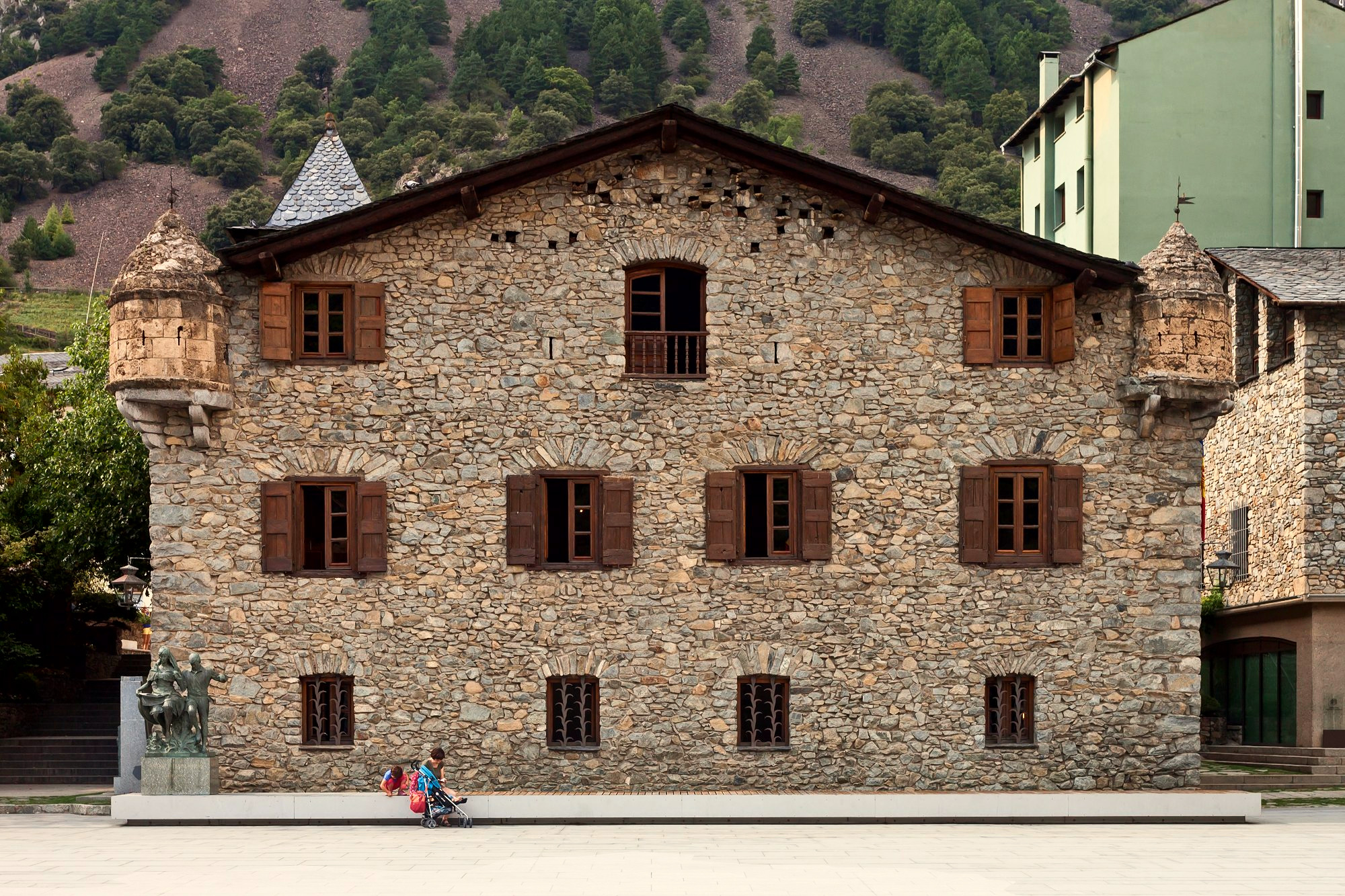
On 23 April 1994, with the Government's authorisation, La Triada is consecrated, the first lodge in the Principality's history. Six months later Montsalvat is born. Regular Andorran Freemasonry begins.
Casa de la Vall (Andorra la Vella).
2000
The Grand Lodge of Andorra is born
On 9 September 2000, in Andorra la Vella, the lodges of the Principality constitute themselves as the Grand Lodge of Andorra: sovereign and independent. The Grande Loge Nationale Francaise issues the founding charter that decrees its consecration and ties it to the succession that runs from the operative masons to modern Freemasonry.
Founding charter of the Grand Lodge of Andorra (2000).
2003
Recognition by the UGLE
On 10 December 2003, meeting at its Quarterly Communication, the United Grand Lodge of England approved the recognition of the Grand Lodge of Andorra. Grand Secretary R.A.H. Morrow conveyed it by letter on 16 December. Recognition by the other regular grand lodges of the world follows from it. It is the last link, and the point where the universal reference becomes a root of its own, of the chain of regularity whose reference is the United Grand Lodge of England (1813), heir to the written tradition of the Old Charges documented back to the Regius Poem (c. 1390). From here, its institutional history has a timeline of its own.
On 10 December 2003, at its Quarterly Communication, the United Grand Lodge of England approved the recognition of the Grand Lodge of Andorra, which Grand Secretary R.A.H. Morrow conveyed by letter on 16 December. Recognition by the other regular grand lodges of the world follows from it. It is the last link in the chain of regularity from the Regius (c. 1390) and the Old Charges to UGLE (1813): here the universal reference becomes a root, and a history, of its own.
Letter from the United Grand Lodge of England notifying the recognition of the Grand Lodge of Andorra (16 December 2003).

2026
A digital Grand Lodge
In 2026 the Grand Lodge of Andorra launches its website and its own portal: a complete management system, with membership roll, certificates, treasury, minutes and instruction, and built-in artificial intelligence, which places it at the forefront of grand lodges. The written tradition that began in the manuscripts continues today in a living, shared archive.
A mosaic of glandorra.com pages, 2026.
Before the idea, the craft
From stone to thought
Long before any manuscript recorded it, there were hands that cut stone and raised cathedrals. From that living workshop, and from no legend, springs everything that follows.
Learn more
Become a Freemason
Begin with a conversation
Serious work on oneself, lived in fraternity and among equals. Open to men of good will, of any origin or belief, willing to hold themselves to a high standard. If it interests you, take the step and write to us.
Request a private conversation Come to an open lodge