The historical journey
From stone
to thought
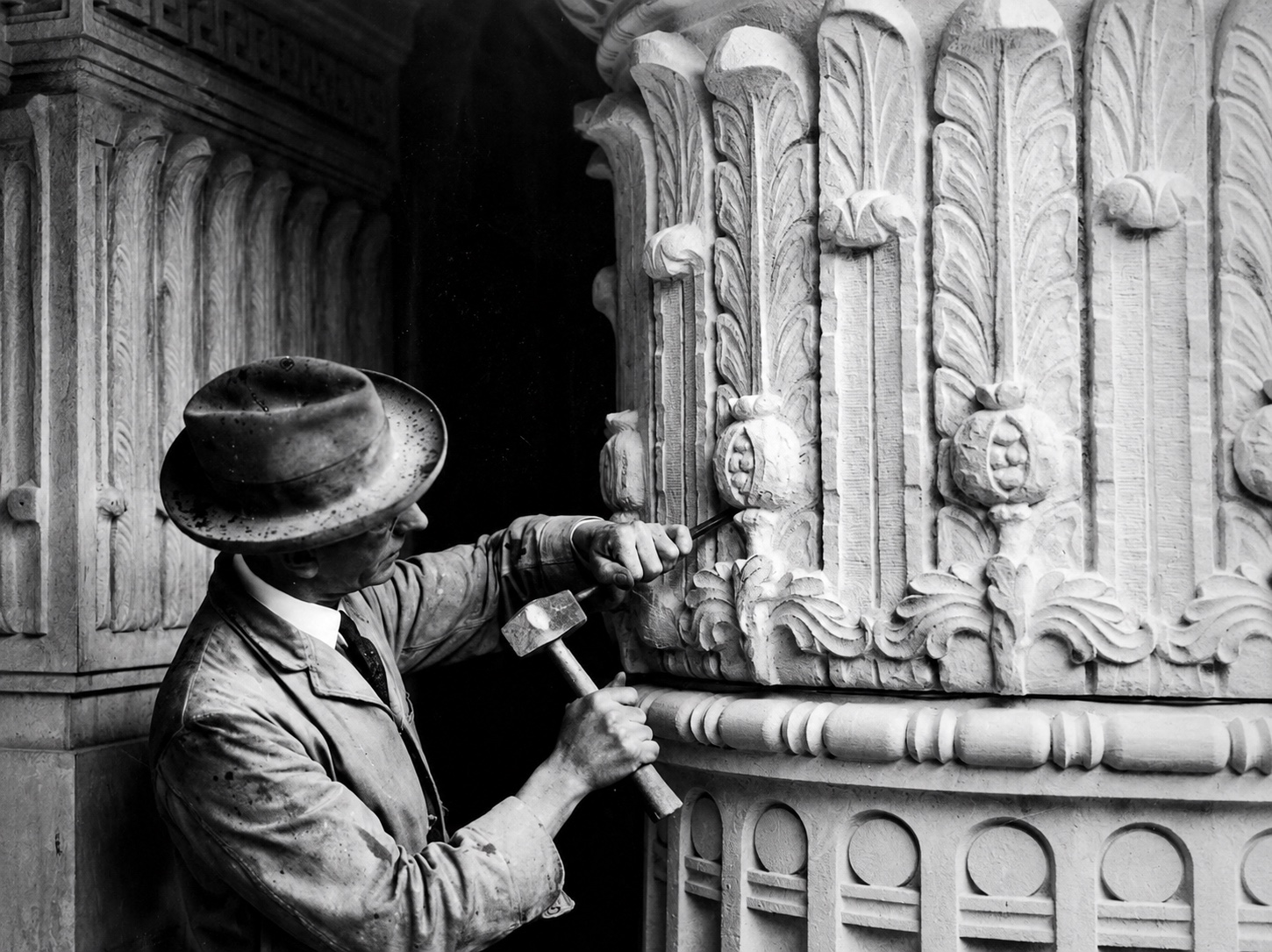
Long before any manuscript recorded it, there were hands that cut stone and raised cathedrals. From that living workshop, and from no legend, springs all that follows.
- IThe operative lodges of stonemasons
- IIThe accepted masons come in
- IIIThe craft turns symbolic
- IVSpeculative Freemasonry is born
More than 600 years of history, yet this page does not follow the years: it follows the ideas. From the stonemason's workshop to the lodge of today, the builder's tools left off cutting stone and became symbols; the craft of raising walls became the art of building oneself. And of doing so in company: the lodge brings together brethren of different beliefs and backgrounds to reflect together, without asking them to think alike. What follows is that journey, from block to idea: how the work of stone became thought, and by what unbroken chain it reaches the lodge of today.
More than 600 years of history, told through ideas rather than dates. From the stonemason's workshop to today's lodge, the tools became symbols and raising walls became the art of building oneself, alongside brethren of different beliefs and backgrounds who reflect together without thinking alike. This is the journey from block to idea, along an unbroken chain.
I
The operative lodges of stonemasons
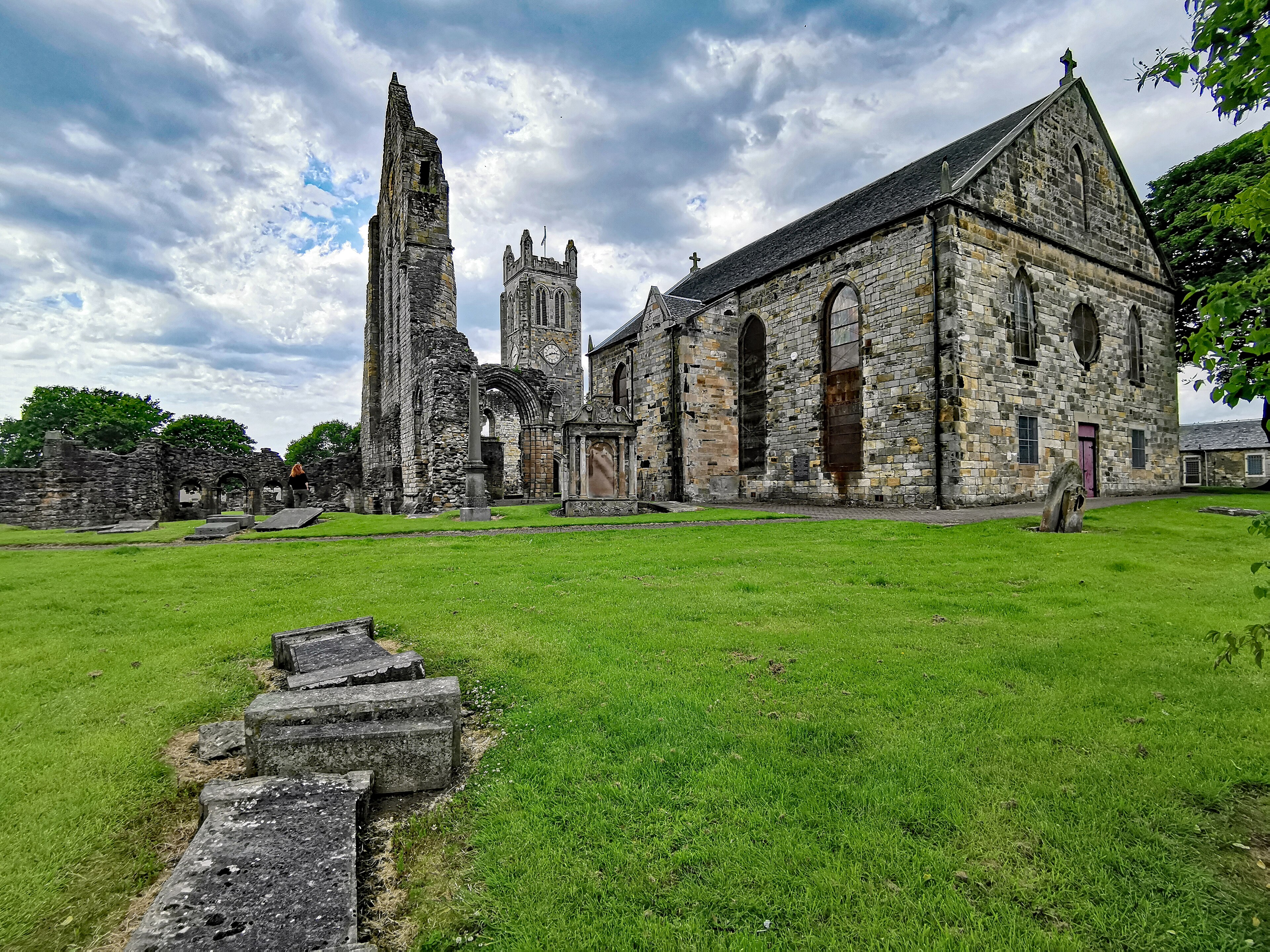
First came the hands: men who cut stone and raised cathedrals. The masons were no labourers: theirs was a skilled trade that gathered in lodges at the worksite to organise the work and guard its secrets. The master moved from one cathedral to the next with no papers or titles; he made himself known by the grips, words and signs that vouched for who truly had the craft. This is no legend: Mother Kilwinning, in Scotland, begins in the Middle Ages as an operative lodge of men who really cut stone, has its meetings on record, and still meets today, now a speculative lodge. The chain from craft to thought has never been broken.
First came the hands: stonemasons who raised cathedrals, a skilled trade that met in lodges at the worksite to organise the work and guard its secrets. The master moved from cathedral to cathedral with no papers or titles: grips, words and signs made him known. This is no legend: Mother Kilwinning, a medieval Scottish operative lodge with its meetings on record, still meets, now speculative. The chain from craft to thought has never been broken.
Ruins of Kilwinning Abbey (Ayrshire, Scotland), cradle of Mother Kilwinning: in its shadow worked the medieval operative lodge that turned speculative and STILL meets.
II
The accepted masons come in
In the seventeenth century, those builders' lodges begin to admit men who do not cut stone: gentlemen, scholars, merchants. They are called accepted masons, to tell them from the operatives, and they are well-documented cases in Scotland and England. They are not there to learn to raise walls. They are there for what the lodge had already begun to be: a place to meet as equals, apart from the rank held outside.
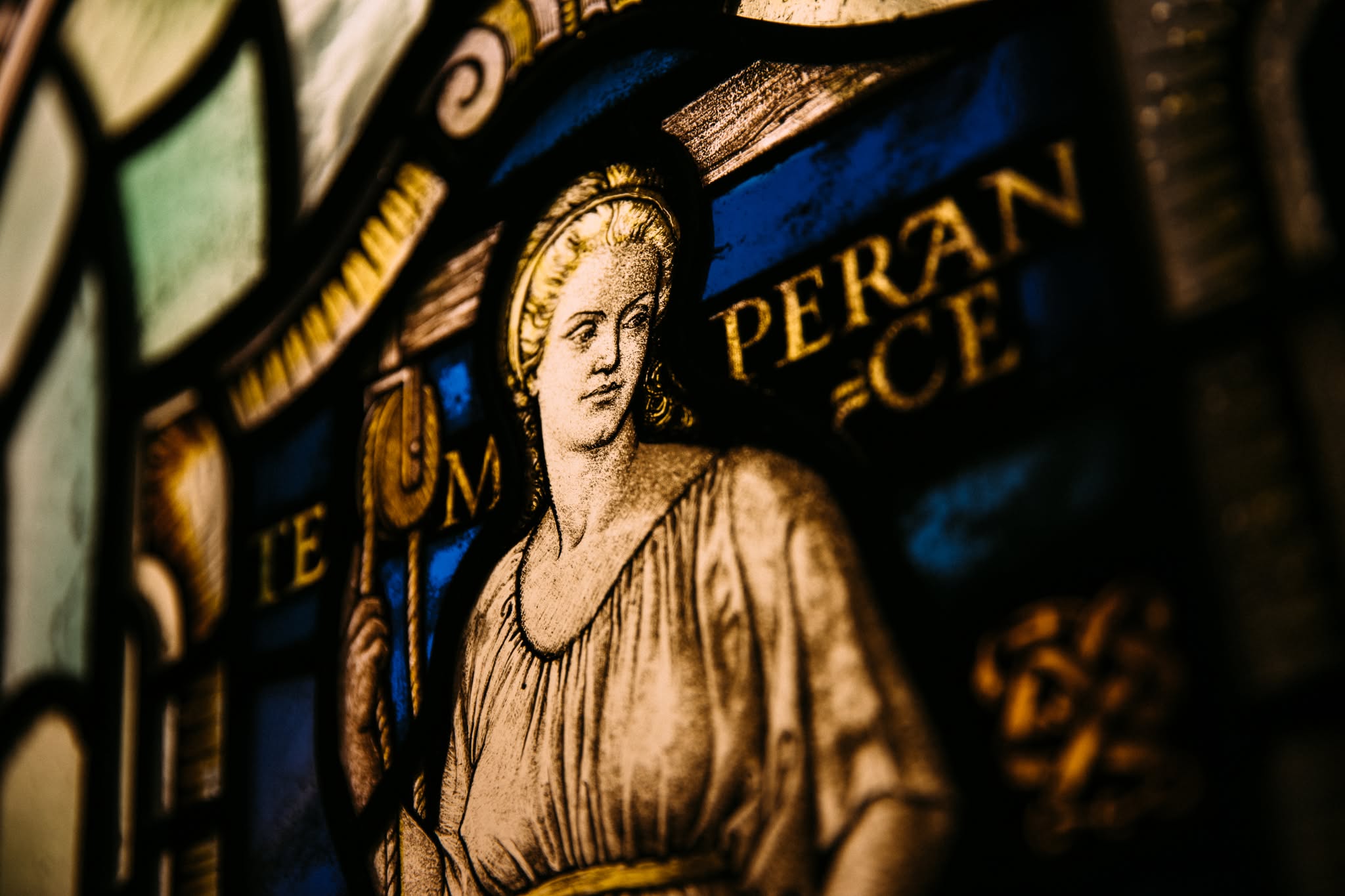
Stained-glass allegory of Temperance at Freemasons' Hall, London: a robed female figure in classical dress, the word TEMPERANCE lettered around her, embodying the virtue of measure.

III
The craft turns symbolic
When the men coming in no longer cut stone, the tools stop being of any use for work. The lodge does not discard them: it makes them into symbols. The square stands for uprightness; the compasses, for measure; the mallet and chisel, for the patient work upon oneself. The rough stone is no longer a block to dress on site: it is a man's own character. The lodge stops building edifices and begins to build men.
Apollo's lyre in gilded relief on the organ front of Temple No. 10 at Freemasons' Hall, London: pure Art Deco ornament on the coffered green-and-gold panel.

IV
Speculative Freemasonry is born
So what we now call Freemasonry is born: the speculative kind. The very language of the guild (the tools, the degrees, the rite of the workshop) put to the service of inner improvement. The great work is no longer a cathedral of stone. It is each man, and the bond between brothers. In 1717 a few London lodges crown the process with the first Grand Lodge, but what counted had already happened within the lodges. The chain that runs from the medieval mason to the lodge of today has never been broken. Not a late invention: the real evolution of a craft into a moral philosophy.
So speculative Freemasonry is born: the guild's language (tools, degrees, the rite of the workshop) put to the service of inner improvement. The great work is no longer a cathedral of stone, but each man and the bond between brothers. In 1717 a few London lodges crown the process with the first Grand Lodge, but what counted had already happened within them. Not a late invention: a craft become a moral philosophy, with the chain never broken.
Source:
UGLE coat of arms on the Master's chair, Freemasons' Hall, London
The inner building
The four cardinal virtues
When the craft became thought, the lodge took four ancient virtues as its model: Temperance, Fortitude, Prudence and Justice.
They are the virtues the Stoics, from Seneca to Marcus Aurelius, placed at the heart of a life well lived. In the lodge they are not studied: they are practised.
Temperance
Governing one's own impulses and passions so that they do not govern us. Not renunciation but measure: taking from each thing what is right and keeping the mind free to choose.

Fortitude
A calm steadiness of mind to face pain, danger or hardship when duty calls for it. Not recklessness: holding to what one has begun and not giving way when it costs.

Prudence
Ordering one's life and actions by reason. It is the habit of thinking before acting, weighing the consequences and judging rightly what is fitting, now and in the long run.

Justice
Giving each person their due, without distinction. For Freemasonry it is the true measure that upholds life in common, within the lodge and beyond it.
Go deeper
Keep discovering
This history leads to a very concrete present. Three doors to follow the thread.
What Freemasonry is
A calm definition, without mysteries: what it is, what it is not, and what it offers.
Read →
Frequently asked questions
The most common doubts about Freemasonry, answered plainly.
See more →
Becoming a Mason
If what you have read speaks to you, this is the first step.
How to begin →
Begin with a conversation
Serious work on oneself, lived in fraternity and among equals. Open to men of good will, of any origin or belief, willing to hold themselves to a high standard. If it interests you, take the step and write to us.
Request a private conversation Come to an open lodge