Symbolism
The art of reading symbols
Every painting hides a lesson. Look at one detail, find out what it meant and how it still speaks in a lodge today.
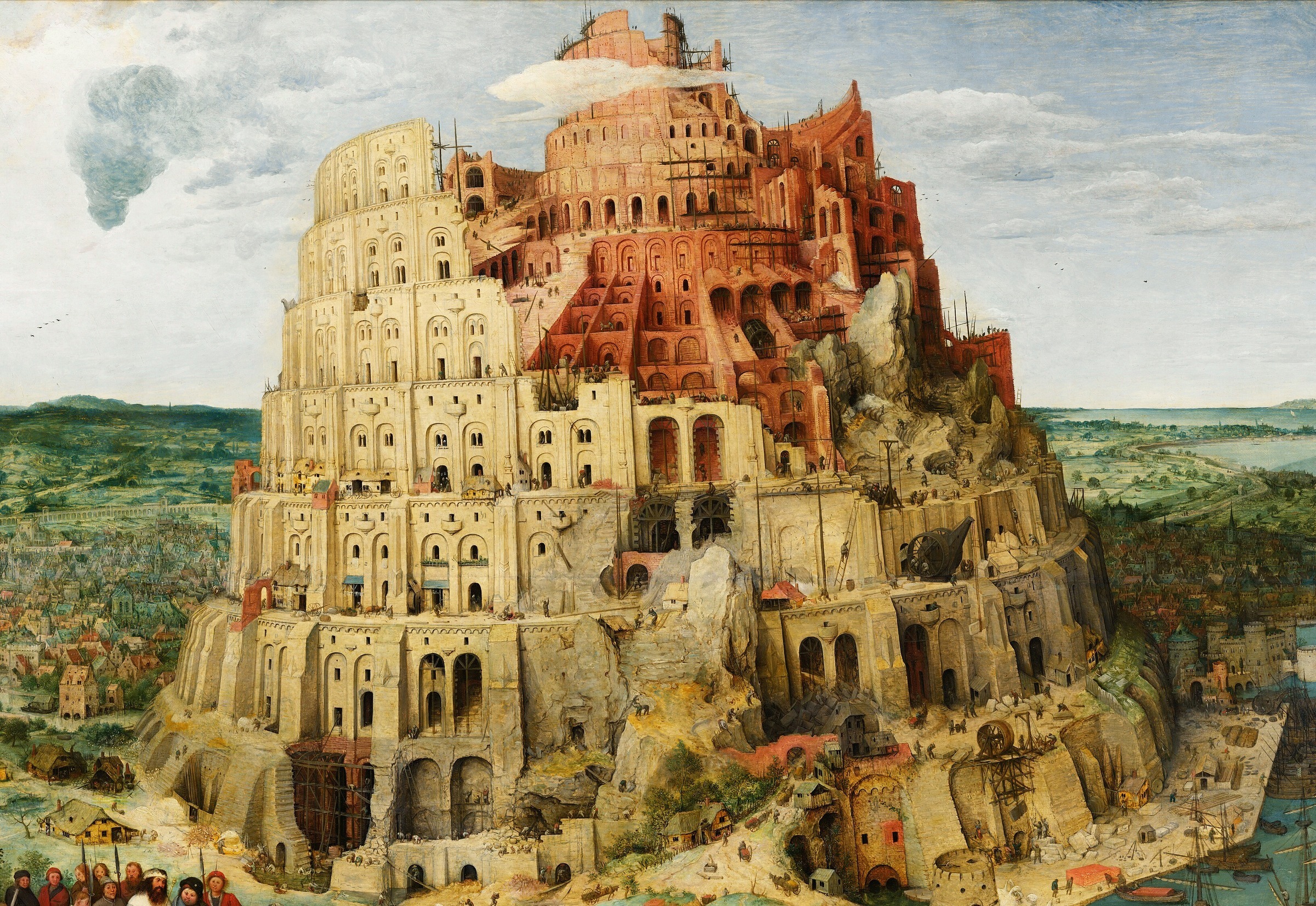
 The stonemasons and the stone Pieter Bruegel the Elder
 The elephant and the giraffe, at peace Bosch
 The compasses and the light from the window Johannes Vermeer
Before you start
Why teach with symbols?
A symbol says more than it shows. A pair of scales speaks of justice. An hourglass reminds us that time runs out. For centuries, painters filled their works with these messages.
In centuries of painting, a symbol says more than it shows: scales mean justice, an hourglass, time.
Freemasonry speaks the same language. It gives no written lessons: it offers symbols from the builder's craft, for each to ponder at his own pace. Here are sixteen, from great works of art. No knowledge of Freemasonry is needed.
Freemasonry speaks the same way, with no written lessons: builders' symbols to ponder at your own pace. Here are sixteen. No knowledge of Freemasonry needed.
The stonemasons and the stone
What it symbolises
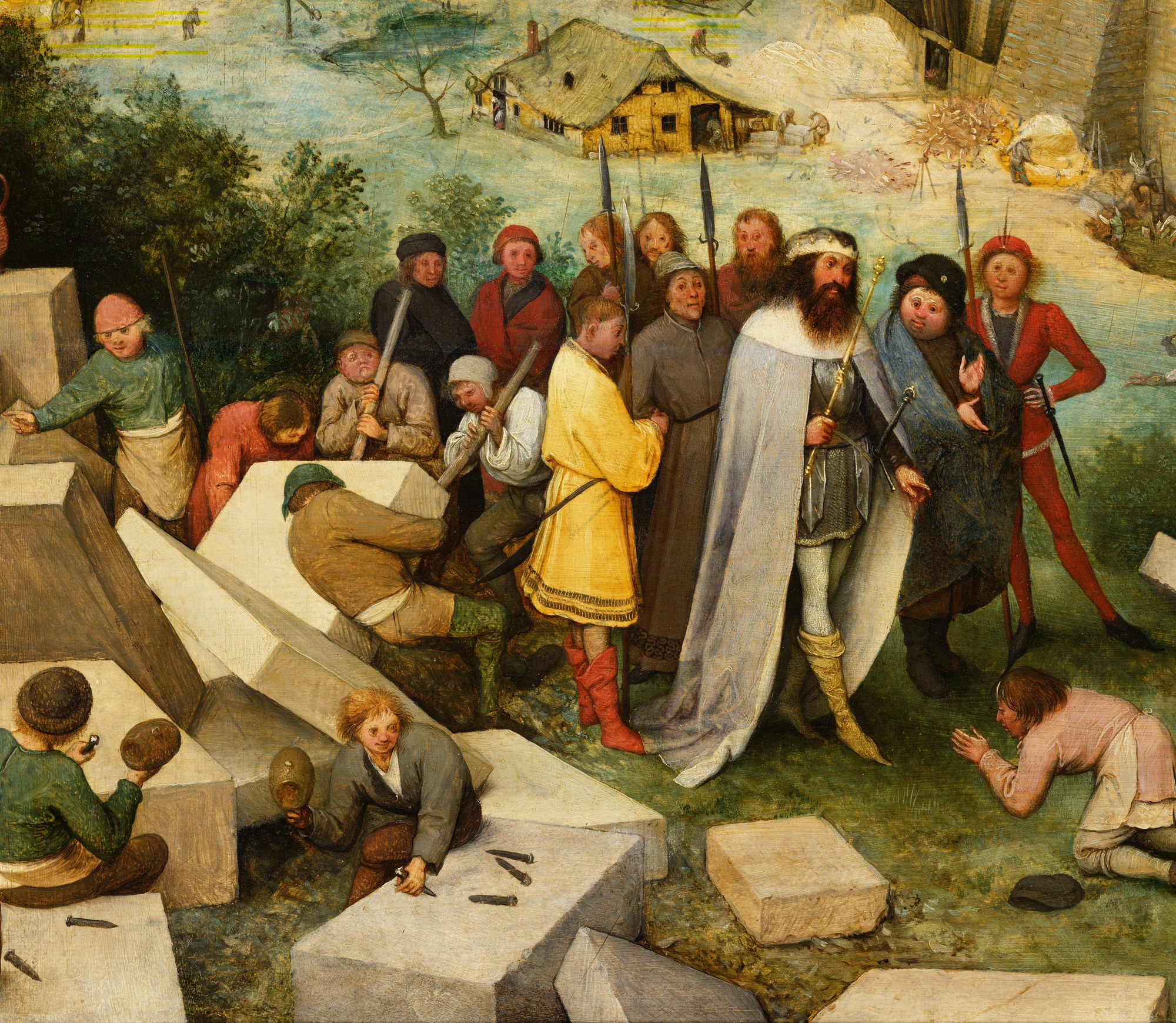
A king inspects the building of the Tower of Babel while the stonemasons cut the blocks. Bruegel paints the craft in detail: tools, stones, effort. This biblical story ends in confusion, when the builders no longer understand one another.
A king visits Babel under construction. Bruegel details the stonemasons: tools, blocks, effort. The biblical story ends when no one understands anyone.
Its Masonic echo
Freemasonry draws its inspiration from these stonemasons. From their work it keeps the tools as symbols, and one idea: a great work only rises if everyone speaks the same language of respect and works together, without pride.
From these stonemasons Freemasonry takes its tools as symbols, and one idea: a great work needs a common language of respect, without pride.

Euclid and the compasses
What it symbolises
Euclid, master of geometry, bends over a slate with a pair of compasses and shows a figure to a group of young men.
Its Masonic echo
The old charges of the stonemasons called geometry the foundation of the craft, which is why the letter G presides over many lodges. And the image of a master patiently teaching beginners is still how one learns in lodge today.
Geometry, the foundation of the craft in the old charges, explains the G in many lodges, where one still learns from a patient master.

The elephant and the giraffe, at peace
What it symbolises
In Bosch's paradise an elephant, a giraffe and animals no one in Flanders had ever seen graze together. The painter knew them from travellers' accounts and drawings.
In his paradise Bosch has an elephant, a giraffe and beasts never seen in Flanders graze together, known from travellers.
Its Masonic echo
Very different creatures live together in peace. The lodge seeks the same on a human scale: men of different origins and beliefs sitting together and working for what unites them.
Very different creatures live in peace. The lodge seeks the same: men of different origins and beliefs, together, working for what unites them.

A detail by Bosch
The owl in the garden
At the heart of the fountain of paradise, Bosch hides an owl that looks straight at us.
In the fountain of paradise, Bosch hides an owl that looks at us.
What it symbolises
Scholars read Bosch's owl as ambiguous: it may be wisdom, because it sees in the dark, or the night of one who shuns the light. The painter does not say. You have to read it yourself.
Scholars find the owl ambiguous: wisdom that sees in the dark, or the night of one who shuns the light. The painter is silent: read it yourself.
Its Masonic echo
That is how Freemasonry teaches: it does not give the answer, it teaches you to look. And its path is that of The Magic Flute: from darkness to light.
Freemasonry gives no answers, it teaches you to look. Like The Magic Flute, it goes from darkness to light.

Square and compasses in one hand
What it symbolises
Laurent de La Hyre paints Geometry as a young woman seated on a block of dressed stone. In one hand, a sheet of figures. In the other, the square and compasses. In the distance, a pyramid and an obelisk: works impossible without measure.
Laurent de La Hyre paints Geometry on dressed stone, with square and compasses, before a pyramid and obelisk: works impossible without measure.
Its Masonic echo
The square tests a right angle and stands for uprightness. Here it rests with the compasses in a single hand, as in the emblem of Freemasonry the world over: uprightness and measure never go one without the other.
The square measures a right angle: uprightness. Here it shares one hand with the compasses, as in the universal Masonic emblem: uprightness and measure, inseparable.
Keep going
Want to know more?
What Freemasonry is
A calm definition, without mysteries: what it is, what it is not and what it offers.
Symbols and tools
Square, compasses, level, rough stone: each symbol in the dictionary, explained in a few lines.
From stone to thought
How the medieval stonemasons became the Freemasonry of today.
The simplest way to get to know a lodge: a meeting open to people who are not Freemasons.

The ermine, white without stain
What it symbolises
Cecilia Gallerani holds an ermine with a white coat. Leonardo plays on her name (in Greek the ermine is galê) and on the emblem of her patron, Ludovico Sforza, who took the ermine as his device.
Cecilia Gallerani holds an ermine, Leonardo's play on her name (galê, in Greek) and the device of her patron, Ludovico Sforza.
Its Masonic echo
Medieval legend held that the ermine would rather die than stain its white fur: it stood for purity. The Freemason's white apron says the same: the clean intention with which the work begins.
Legend held that the ermine would rather die than be stained. The Freemason's white apron speaks of that purity: clean intention as the work begins.

The temple of the ideal city
What it symbolises
An empty square, perfectly ordered, with a round colonnaded building at its centre. There is nobody there: the subject is order itself. This is how Renaissance artists imagined the perfect city, built with proportion, symmetry and measure.
An empty square, a round colonnaded building and nobody: only order. So the Renaissance dreamed the perfect city: proportion, symmetry, measure.
Its Masonic echo
We Freemasons speak of building our own temple, but not of stone: the temple of our own life. The columns, the orders of architecture and the search for harmony you see here are part of our symbolic language.
We Freemasons build a temple not of stone: our own life. Columns, orders of architecture and harmony belong to our symbolic language.

The cut stone and the ladder
What it symbolises
A large block of stone with strange facets and a ladder climbing to nowhere. The polyhedron speaks of geometry and of how hard it is to know. The ladder, of a journey not yet finished.
A stone with strange facets speaks of geometry and the effort of knowing. A ladder to nowhere, of an unfinished journey.
Its Masonic echo
In Freemasonry, the initiate dresses his own rough stone until it becomes a perfect cube: the image of a person working on himself. A work that is never quite finished.
In Freemasonry, the initiate dresses his rough stone into a cube: a person working on himself, a work never quite finished.

The Magic Flute: from night to light
What it symbolises
Mozart, a Freemason from 1784, and his librettist Schikaneder, also a Mason, filled “The Magic Flute” with images that Masonic tradition recognises: the passage from night to light.
The Freemasons Mozart (from 1784) and Schikaneder, his librettist, filled “The Magic Flute” with Masonic images: from night to light.
The Magic Flute in a Masonic key
- From darkness to light. Tamino seeks wisdom.
- No one walks alone. He passes the trials with Pamina.
- Each at their own pace. Good faith counts, not learning.
Keep discovering
From image to idea
If your curiosity is piqued, here is where to go next.
Becoming a Freemason
If what you have read speaks to you, this is the first step.
Frequently asked questions
The most common questions about Freemasonry, answered plainly.
Open lodge
A meeting open to people who are not Freemasons, to see it up close and ask questions.
The measure of a column
What it symbolises
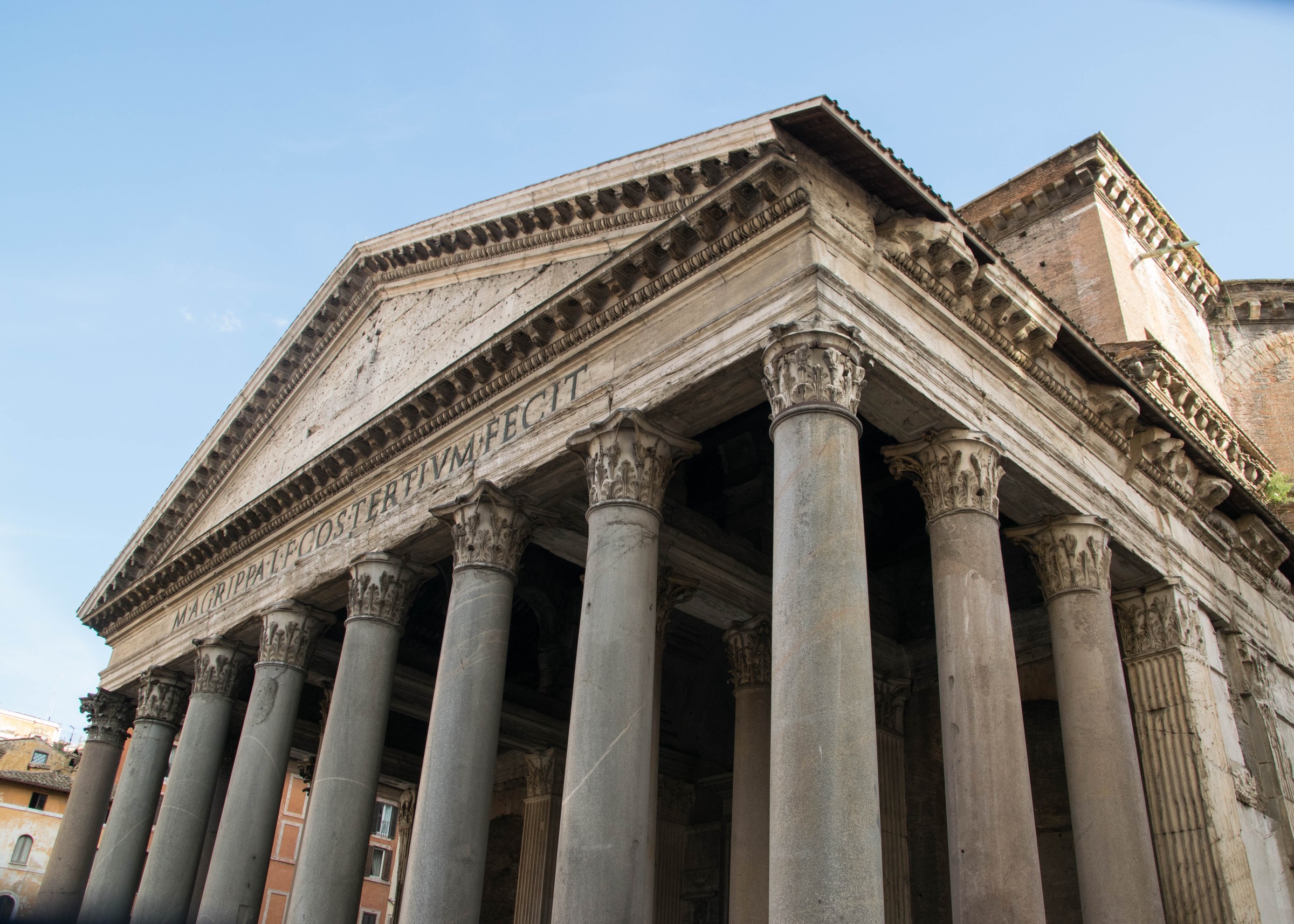
Sixteen Corinthian columns, each a single block of granite, carry the portico of the Pantheon in Rome.
Its Masonic echo
Freemasonry keeps this lesson: the work of the lodge is deemed perfect when each member is in proportion to the whole.
Three orders, three pillars
- Doric: Strength. To support the work.
- Ionic: Wisdom. To contrive it.
- Corinthian: Beauty. To adorn it.

The balance at rest
What it symbolises
A woman holds an empty balance and waits for it to come to rest. There are pearls and gold on the table, but she weighs nothing: she is only looking for equilibrium. Behind her hangs a painting of the Last Judgement.
A woman beside pearls and gold weighs nothing: she waits for her empty balance to settle. Behind her, a Last Judgement.
Its Masonic echo
It is an invitation to temperance: to weigh one's own deeds calmly, before others judge them. Justice and temperance are two of the four cardinal virtues that the Masonic tradition sets before the Freemason.
It invites temperance: judging oneself calmly before others do. Justice and temperance are two of the Freemason's four cardinal virtues.

The compasses and the light from the window
What it symbolises
A scholar, compasses in hand, looks up from his map towards the window. Vermeer paints the very moment when measuring turns into thinking: he has measured the world and now he reflects, lit by the light that streams in.
Compasses in hand, a scholar looks up from his map: Vermeer paints measure turned into thought, in the light of the window.
Its Masonic echo
The compasses are among the best-known Masonic symbols: they draw circles and remind us to keep our conduct within due bounds. And the light at the window recalls the light a Freemason seeks.
The compasses, among the best-known Masonic symbols, draw circles: due bounds for conduct. The window recalls the light a Freemason seeks.

The lute with a broken string
What it symbolises
On the lower shelf, a globe, a hymn book and a lute with a broken string. Music was the image of harmony. The broken string, a sign of discord in a divided Europe.
On the lower shelf, a globe and a lute with a broken string: musical harmony, broken by a divided Europe.
Its Masonic echo
The lodge aims to be the very opposite of a broken string: a place where people of different ideas and beliefs meet in harmony, without arguing about politics or religion. Music, moreover, accompanies the work of many lodges.
The lodge aims to be the opposite of a broken string: different ideas and beliefs in harmony, without politics or religion, often with music.

The geometric solid
What it symbolises
Leonardo drew this twenty-six-sided solid for his friend Luca Pacioli's book on the proportion that gives forms their harmony.
Its Masonic echo
For the builder, beauty is born of the right measure. A Freemason applies the same idea to his own life: proportion and balance.

Vanitas: beauty too will pass
What it symbolises
A celestial globe, an open book, a violin, silver cups and sheet music, carefully piled up. All we cherish, knowledge, art and wealth, appears beautiful and yet fleeting.
A celestial globe, a book, a violin, silver cups, sheet music: knowledge, art and wealth, all we cherish, beautiful and fleeting.
Its Masonic echo
For the Freemason it is not a sad lesson: our goods are worth the use we make of them. That is why the Apprentice's tools include the twenty-four-inch gauge: dividing the day between work, rest and service.
This does not sadden the Freemason: goods are worth their use. The Apprentice's twenty-four-inch gauge divides the day: work, rest, service.

The little dog
What it symbolises
At the couple's feet a little dog looks out at the viewer. Painted hair by hair, it is one of the best-loved details in Flemish art. It has traditionally been read as a sign of fidelity, though it also shows the comfort of the household.
At the couple's feet, a little dog painted hair by hair looks at the viewer. It reads as fidelity and a comfortable home.
Its Masonic echo
Keeping one's word is a duty of honour for a Freemason, in the lodge and outside it. Being someone others can rely on: a simple virtue, and perhaps the hardest.
For a Freemason, keeping his word is a duty of honour, in lodge and out. Being reliable: a simple virtue, perhaps the hardest.

The globe and the instruments of the sky
What it symbolises
Between the two ambassadors stands a shelf full of objects: a celestial globe, sundials and instruments for measuring the stars and time. They show the learning of the age, and of the sitters, about the heavens and measurement.
Between the ambassadors, a shelf with a celestial globe and instruments to measure stars and time: their learning and their age's.
Its Masonic echo
Freemasonry invites the study of the seven liberal arts, among them astronomy, arithmetic and geometry. And in many lodges two spheres, one terrestrial and one celestial, crown the pillars at the entrance: earth and sky as a field of study.
Freemasonry invites the study of the seven liberal arts, astronomy included. In many lodges two spheres, terrestrial and celestial, crown the entrance pillars.
Keep exploring
Beyond the paintings
Six centuries of history, men who left their mark and the lodges that work in Andorra today.
The timeline
From the Regius Poem (1390) to the Grand Lodge of Andorra: six centuries on one line.
Famous Freemasons
Artists, scientists and musicians who belonged to a lodge.
Our lodges
The lodges working in Andorra today, each with its own rite.
Become a Freemason
Begin with a conversation
Serious work on oneself, lived in fraternity and among equals. Open to men of good will, of any origin or belief, willing to hold themselves to a high standard. If it interests you, take the step and write to us.
Request a private conversation Come to an open lodge