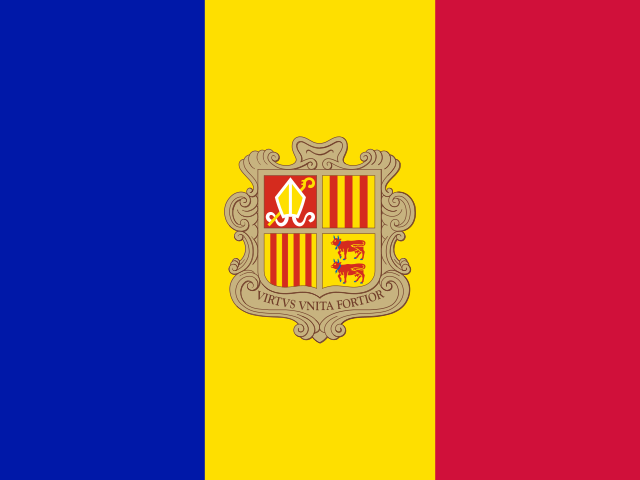
Masonic dictionary · letter W
The words of the Craft
The vocabulary of regular Freemasonry: what each word means when we use it in the lodge.
From A to Z
Brief definitions of the terms of the Craft, its history, its symbols and the traditions it is often confused with. They do not explain the ritual, which is lived: they give things a clear name, so that you understand what we are talking about.
W 21 terms
Wardens
The lodges
The two officers who, with the Worshipful Master, direct the lodge: the Senior and Junior Wardens oversee the work and keep good order.
See also Grand WardensLevelPlumb rule
Warrant (charter)
Regularity and recognition
The document by which a recognised Masonic authority founds or authorises a lodge or a Grand Lodge. The Grand Lodge of Andorra's was issued by the GLNF in 2000.
See also ConsecrationLineageClandestine
West
The lodges · Symbols and working tools
The part of the lodge opposite the East, near the entrance. Symbolically, the point from which one sets out towards the light.
See also EastWardensOrientation of the lodge
White gloves
Symbols and working tools · The lodges
The gloves a Freemason wears in lodge. Their whiteness recalls clean actions and the equality of all the brethren.
Widows and orphans
Charity
The lodge's traditional duty towards the families of departed brethren, whom the Order does not forget.
William Hogarth
History and origins · Symbols and working tools
English painter and engraver (1697-1764), a master of moral satire. He was initiated between 1725 and 1728 in a London lodge and became a Grand Steward, yet did not hesitate to satirise Freemasonry itself in some of his prints.
See also Anderson's ConstitutionsJohn PineMuseum of Freemasonry
William James Hughan
History and origins · Principles and values
An English Masonic historian (1841-1911), author of The Old Charges of British Freemasons (1872), a standard study of these manuscripts. He was one of the nine founders of the research lodge Quatuor Coronati.
William Preston
History and origins · Rites and degrees
Scottish Freemason (1742-1818) settled in London, author of Illustrations of Masonry (1772). His lectures shaped later English instruction.
See also InstructionLecturesEmulation
William Schaw
History and origins · The lodges
Master of Works to King James VI of Scotland (c. 1550-1602) and a key figure in the organisation of Scottish lodges. The statutes that bear his name, of 1598 and 1599, required lodges to keep records and to regulate admission.
William St Clair of Roslin
History and origins · Regularity and recognition
A Scottish laird (1700-1778) who was the first Grand Master Mason of the Grand Lodge of Scotland, elected by acclamation on St Andrew's Day 1736. That same year he had been initiated in Lodge Canongate Kilwinning in Edinburgh.
See also Grand Lodge of ScotlandLodge Canongate KilwinningMother Kilwinning
William Stukeley
History and origins · Architecture and geometry
An English antiquarian, physician and clergyman (1687-1765), a pioneer in the study of Stonehenge and Avebury. He was initiated in January 1721 and by 1723 was Master of the lodge meeting at the Fountain Tavern on London's Strand.
Winding staircase
Symbols and working tools
The winding stair which, according to the Book of Kings, led up to the middle chamber of Solomon's Temple.
Wisdom, Strength and Beauty
Symbols and working tools
The three pillars that, by tradition, symbolically support the lodge: wisdom to contrive, strength to support and beauty to adorn.
Withdrawal of recognition
Regularity and recognition
A decision by which a Grand Lodge suspends or ends its recognition of another because it no longer observes the principles of regularity. Visiting between the brethren of the two is suspended.
Women's Freemasonry
Other traditions · Regularity and recognition
Grand Lodges that initiate women only. In England there are two, the Order of Women Freemasons and the Honourable Fraternity of Ancient Freemasons. On 10 March 1999 UGLE stated that, except that they admit women, they are, so far as can be ascertained, regular in their practice. It does not recognise them and there is no intervisitation, but it holds discussions with them on matters of mutual concern, and in 2024 it issued a joint statement with both.
Working
Rites and degrees
Each of the versions of the same ritual that share their substance and differ in wording and detail. All are equally regular.
Working language
The lodges
The language in which a lodge works. In Andorra there are lodges working in Catalan, Spanish, French and English.
See also LodgeRiteVisiting brother
Working tools
Symbols and working tools · Rites and degrees
The stonemason's tools that Freemasonry takes as symbols and explains in moral terms: the gauge, the gavel and the chisel, the square, the level and the plumb rule, the compasses or the trowel, among others. They remind us that work on oneself calls for measure, effort and uprightness.
Workshop (atelier)
The lodges
Another name for the lodge: the place where the stone is worked.
See also LodgeLaboursStonemason
Worshipful Company of Masons
Other traditions · History and origins
The stonemasons' guild of the City of London, recorded since at least the fourteenth century and chartered in 1677. Today it is a livery company independent of Freemasonry.
Worshipful Master
The lodges
The brother who presides over a lodge and directs its work, elected by his brethren. Each of the nine active lodges of the Grand Lodge of Andorra has its own.
See also InstallationInstalled MasterEast
No term matches your search.
Try another word or remove the theme filter.
Did you mean
Dictionary of the Grand Lodge of Andorra, licence CC BY 4.0.
Become a Freemason
Begin with a conversation
Serious work on oneself, lived in fraternity and among equals. Open to men of good will, of any origin or belief, willing to hold themselves to a high standard. If it interests you, take the step and write to us.
Request a private conversation Come to an open lodge