Structure
The basic unit is the Court, grouped into Provinces that, wherever possible, reflect the ancient kingdoms of Athelstan's England. Above them stands the Grand Lodge of the Order.
Collateral body · Court of Guifré I
The Order of Athelstan is a modern Masonic order, born in England, open to Master Masons of regular Masonry.
It takes its name from King Athelstan, whom English Masonic tradition links to the legendary origins of the craft. To join, one must also be a Companion of the Royal Arch.

It is an order of fraternal and celebratory tone, joining the memory of this tradition with an active social life.
The basic unit is the Court, grouped into Provinces that, wherever possible, reflect the ancient kingdoms of Athelstan's England. Above them stands the Grand Lodge of the Order.
Despite its youth, the order already counts more than one hundred and thirty Courts, Provinces in Europe, the Americas and the Far East, and its own Grand Courts in Australia and India.
The order was founded in 2005 by a group of Masonic researchers, and its first Court was consecrated on 22 October 2005 at Newmarket, in the east of England. Its theme draws on the figure of King Athelstan and the York legend, according to which the king granted Masons their first charter and summoned an assembly at York in the year 926. As throughout Freemasonry, the reference is legendary and symbolic, not a documented fact.
Founded in 2005 by Masonic researchers, the order consecrated its first Court on 22 October 2005 at Newmarket, in the east of England. It evokes King Athelstan and the York legend: he is said to have given Masons their first charter and gathered an assembly at York in 926. As throughout Freemasonry, this is legend and symbol, not documented fact.
In Andorra the Court is called «Court of Guifré I», after Guifré the Hairy (ninth century), Count of Urgell and Cerdanya, and later of Barcelona. The link runs through the county of Urgell: its comital house held lordship over the Andorran valleys, and from that root would later come the co-principality, with the Bishop of Urgell as co-prince.
York, 926
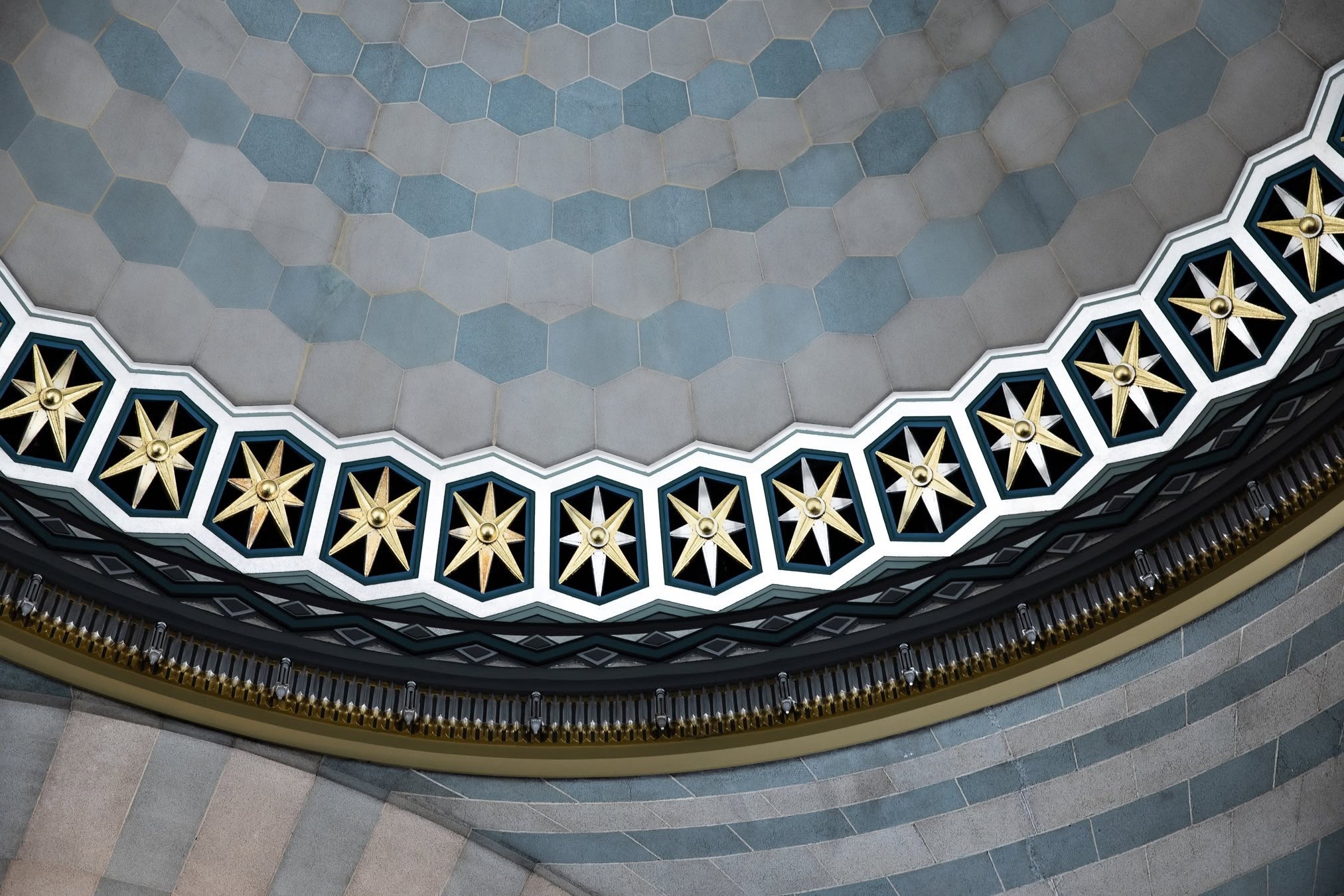
Tradition places at York, in the year 926, the assembly of King Athelstan that the order's memory claims as its symbolic root. The Gothic cathedral that presides over the city today still keeps its echo.
Unlike other bodies, the Order of Athelstan confers no degree set above that of Master Mason and does not extend its system: it presupposes it and stays within it. What it offers, then, is not a progression but a company: a space where the Master cultivates brotherhood and the memory of the craft's origins without leaving his own degree. It is, in this sense, one of the lightest of the Masonic bodies, meant more for fellowship than for instruction.
Unlike other bodies, the Order of Athelstan confers no degree above Master Mason and does not extend the system: it presupposes it. It offers company, not progression: a space to cultivate brotherhood and the memory of the craft's origins without leaving one's own degree. It is among the lightest bodies, meant more for fellowship than for instruction.
Around the Lodge
They are, then, paths of deepening that continue the work of the lodge—each order adding its own ritual and history upon the common foundation of the three degrees. Described here are the regular Masonic bodies that exist in Andorra; some brethren also take part in other Masonic bodies in other countries.
All collateral bodiesThe path
These orders receive Master Masons. The path begins in a lodge of the Gran Lògia d'Andorra.
Become a Freemason All collateral bodiesThe Gran Lògia d'Andorra is an association registered in the Register of Associations of the M.I. Govern del Principat d'Andorra (NRT U803452F) and holds the glandorra.com domain, its name, its coat of arms and its own content.
The Gran Lògia d'Andorra is the data controller for the personal data of this website, this domain and all its services (forms, chat and portal), in accordance with Law 29/2021, of 28 October, the qualified law on personal data protection.
At the Grand Lodge of Andorra we do everything in our power to protect your privacy: connections and personal data are encrypted, and the security of this website is regularly assessed by independent services (Mozilla Observatory, Qualys SSL Labs and Security Headers). More details in our Privacy Policy.
The public and private website, its design and structure, and the Grand Lodge ERP software are the property of hub.haus, which grants their use to the Gran Lògia d'Andorra under licence. The licence covers the software, not the data. Developed in the Valleys of Andorra
The AI of the Grand LodgeThe AI of the Grand Lodge of Andorra
End the conversation?
Questions in this chat need no personal data: please do not type any.
 Bosch, the AI of the Grand Lodge of Andorra.